Plan Better Without Doing More
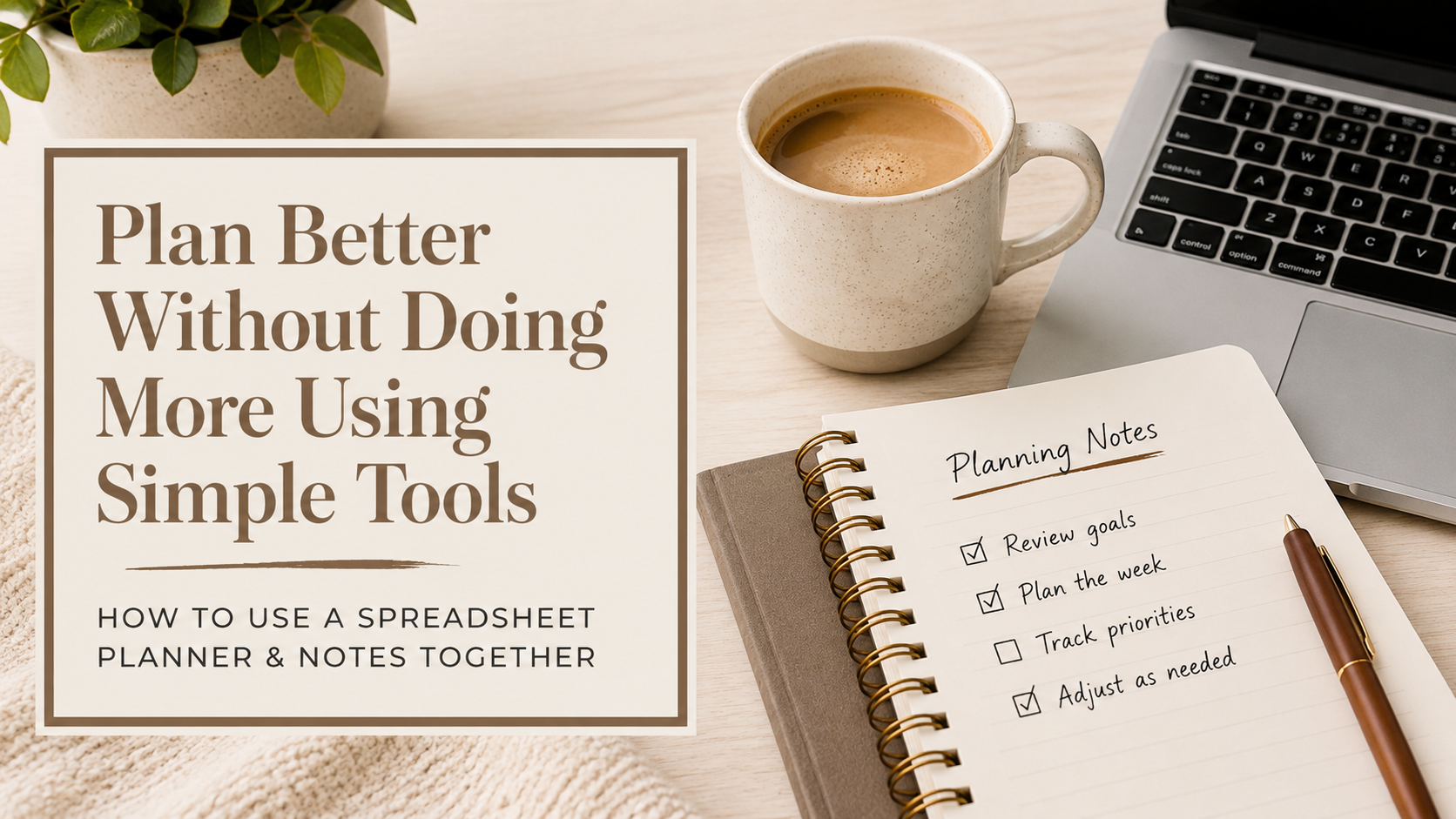
Make Your Planner Work Better With Simple Tools
Sometimes planning doesn’t start in your planner.
It starts when you are in the middle of something else and suddenly remember three things you meant to do. Or when you finally sit down with coffee and your brain decides now is the time to think about everything at once.
That part is barely ever organized. It is usually a mix of half-formed thoughts, reminders, a small collection of sticky notes, and things you do not want to forget again.
What Spreadsheets Are Actually Good At
Spreadsheets are really good at holding structure, and that is exactly what makes them so useful. They give you a clear place to see what is happening, what is coming up, and what has already been handled. That kind of clarity is what makes tools like a monthly planner, a bill tracker, or a weekly cleaning schedule actually work long term.
At the same time, planning does not always begin in a "structured" way. Most of it starts as thoughts that are still taking shape, and those do not always fit neatly into rows or columns right away. Trying to force that early stage of thought directly into a spreadsheet can make the process feel more rigid than it needs to be.
This is where something like a printable page or a digital notebook fits in naturally, not as a replacement, but as support. I use the same idea with a weekly reset where the messy part happens first and the structure comes after.
Why Spreadsheets Work Better When They’re Not Doing Everything Alone
Instead of asking one tool to do everything, it helps to let each one handle a different part of the process. This is where things started to click for me. Spreadsheets work better when they are not doing everything alone.
You might start by getting everything out of your head in a notebook or on a simple page. Nothing polished, nothing finalized. Just enough to see what you are actually working with.
Once things feel clearer, your spreadsheet becomes the place where those ideas turn into a plan you can follow. This is exactly how I use a simple monthly planner, where I only move things over once they actually make sense instead of trying to plan everything all at once.
Your monthly planner holds what you are realistically committing to. Your bill tracker keeps your numbers clear and up to date. Your weekly cleaning planner gives your routine a structure you do not have to rethink every few days, especially when you already have something you can come back to each week.
Because you are not starting from scratch inside the spreadsheet, it feels easier to use and much easier to keep up with.
How This Changes the Way Planning Feels Over Time
This shift becomes even more noticeable over time.
Planning your month starts to feel less like filling in boxes or checklists and more like placing things where they belong. Budgeting becomes less reactive because you have already thought through your decisions before updating your tracker. Even your weekly routines feel more flexible, since you are adjusting them based on real life instead of trying to force every week to look the same.
Nothing about your tools has changed, but the way they work together has.
Using a Printable or Digital Notebook Without Overcomplicating It
If you prefer not to print anything, a digital notebook works just as well. It can be as simple as a running page where you keep notes, quick resets, or anything that needs a place to land before it is organized. It does not need a complicated setup to be useful. It just needs to exist.
A Simple Shift That Makes Your System Easier to Maintain
When you look at your system this way, it becomes less about adding more and more about using what you already have a little differently.
Your spreadsheet gives you a steady structure you can rely on. Your notebook or printable gives you space to think things through before you organize them. Together, they create a system that feels more natural because it follows how planning actually happens.
If you are already using something like a monthly planner, a bill tracker, or a weekly cleaning and chore planner, you do not need to rebuild anything. You can keep using them exactly as they are.
The only shift is giving yourself a small space alongside them where you can think things through before you update your sheets. Even something as simple as reflecting on what worked, what needs adjusting, or what felt like a small win during the week can help connect the two parts of your system in a way that feels easier to maintain over time.
That is also why I tend to keep my planners simple, so they are easy to come back to instead of something you have to keep reworking.
If you’re looking for simple tools to build a system like this, I have a few planners and trackers in my shop that are designed to work this way.
Related posts: