Rebuilding a Budgeting Habit Without Starting Over
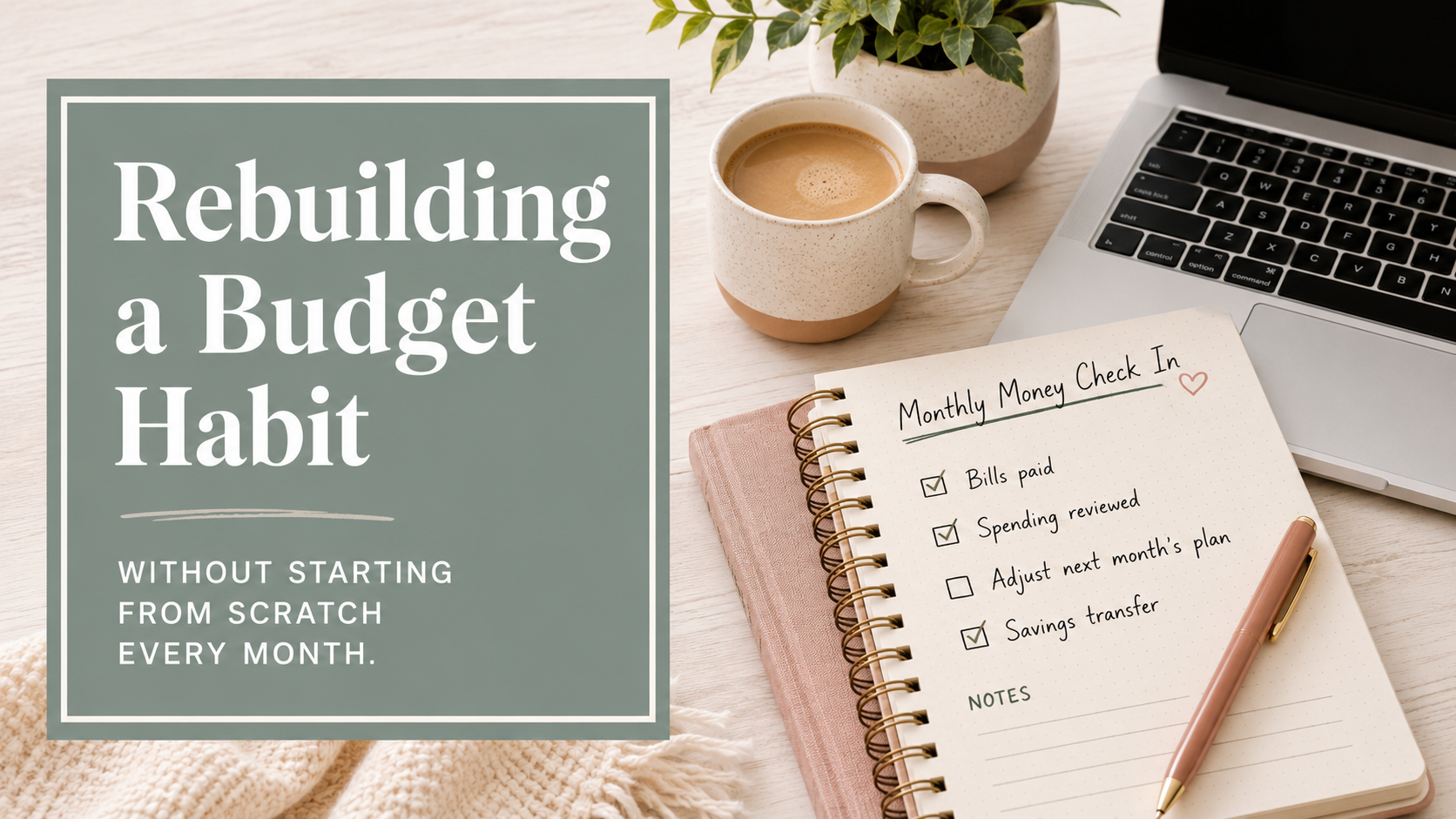
I’ve lost count of how many times I’ve “started over” with budgeting.
New spreadsheets. New apps. New rules I swore I’d follow this time.
It usually went the same way. I’d track everything carefully for a week or two, miss a few days, feel behind, and slowly stop opening the file or app altogether. At some point, I’d decide I needed a better system and the cycle would start again. I’ve noticed this same pattern in weekly planning as well.
What I eventually realized is that I didn’t need a new system. I needed a different way of approaching the habit itself.
Why budgeting habits break down
Most budgeting systems are built around consistency. Daily tracking, perfect categorization, and constant attention.
That can sound reasonable on paper, but real life doesn’t really work like that. Energy dips and priorities shift. Some weeks you’re completely on top of things, and other weeks you’re just trying to get through.
When a system doesn’t allow for that, missing a few days can feel like a total failure. And once it feels like failure, it’s easier to avoid the whole thing than to jump back in. That’s where most budgeting habits quietly fall apart.

The shift that actually helped me
The biggest change for me was letting go of the idea that budgeting had to be continuous to be useful. Instead of focusing on never missing a day, I focused on making it easy to return without guilt or overwhelm.
That meant using a tracker that:
Didn’t punish gaps
Didn’t require setup every time I came back
Let me see totals and patterns without micromanaging
Felt “neutral” instead of judgmental
Once I stopped treating budgeting like a streak I had to maintain, it became something I could come back to whenever I needed it.
Budgeting as a rebuilding practice
Rebuilding a budgeting habit doesn’t mean starting from zero. It means creating a setup where you can step away and step back in without becoming completely overwhelmed.
Some months I check in weekly. Some months it’s more sporadic. The point isn’t perfection. The point is having awareness.
Knowing roughly what’s coming in, what’s going out, and where things tend to drift gives me enough information to make small adjustments. Small adjustments are much easier to maintain than total resets.
Why simple tools matter
Complex systems can be powerful, but they also come with a higher cost of entry. When a budgeting tool requires too much attention, it becomes one more thing competing for limited energy. That’s usually when avoidance creeps in.
Simple tools lower the barrier to re-engagement. You open the file, add what you know, and move on.
That ease is what keeps the habit alive.
✨ A note if you’re rebuilding too:
I built a simple budget tracker in Google Sheets based on how I manage my own finances now. It’s designed to be flexible, straightforward, and easy to come back to after a break.
If rebuilding a budgeting habit without starting over sounds like it will work for you, it may be a useful tool for when you are ready.
No pressure. Just an option. You can check it out here on Etsy and see if it's a good fit for you.
✨ Another Tip:
How worksheets can make budgeting feel more manageable
One thing I’ve learned the hard way is that even the simplest digital systems can feel like too much on low energy days.
Sometimes opening a spreadsheet feels like one step too far. Not because it’s hard, but because it requires a certain kind of focus that just isn’t there in that moment.
That’s where paper based worksheets can help.
Writing things out by hand can feel more accessible when your brain is tired. You can jot down expenses, note balances, or sketch out what’s coming up without worrying about totals, formulas, or getting everything perfectly entered.
The goal isn’t accuracy in real time. It’s just getting it done.
Using paper first, spreadsheet later
One way I use worksheets alongside a budgeting spreadsheet is as a holding space.
If I don’t feel like opening the spreadsheet, I’ll write things down instead. Bills that came in. Spending that happened. Notes about what feels tight or needs attention.
Then, when I have more energy or time, I can transfer that information into the spreadsheet all at once.
This takes the pressure off having to “keep up” daily and turns budgeting into something you can move in and out of without losing the thread.
Budgeting doesn’t have to happen all at once
Spreadsheets are great for seeing patterns, totals, and trends over time. Worksheets are great for meeting yourself where you are.
Used together, they create flexibility.
You can track when you have the capacity.
You can write things down when you don’t.
And nothing breaks if there’s a gap in between.
That’s often what makes the habit sustainable.
If that approach sounds useful
When I listed my Simple Budget Tracker, I added a small set of printable budget worksheets as a bonus for this exact reason. They’re there to support low energy days and reduce overwhelm, not replace the system.
You don’t have to use both. You don’t have to use them every day. They’re simply another option for rebuilding a budgeting habit without starting over.