Your Products and Content Should Work Together
Your Products and Content Should Work Together
Creating a new product is only one part of running a digital product business. Once the product is finished, there’s still the listing to write, the blog post, whatever platform content you’re creating, the newsletter, the freebie connections, and all those links that somehow need to end up in the right places. When each piece is planned or tracked in a different place, it becomes surprisingly easy to forget what has been published, what still needs attention, and which content belongs with which product.
The problem is not always a lack of ideas. Sometimes there are plenty of ideas, but no clear way to see how everything connects.
Start With the Product
Instead of planning every piece of content separately, start with the product at the center. What problem does it solve? Which blog topics naturally support it? Is there a freebie that introduces the same idea? Which platform content could lead someone to the product or to a related blog post, such as a Pinterest Pin or social post?
This creates a simple path from product to content rather than a collection of disconnected tasks. One product can lead to a helpful blog post, platform content, a newsletter mention, and future content ideas without needing a completely new marketing plan every time.
Keep the Connections Visible
A product and its supporting content may be created weeks or even months apart. Keeping the connections visible makes it easier to return to an older product, see what already exists, and decide what would still be useful.
For example, you may have a finished product that has been listed but never featured on the blog. You may have a published blog post that still needs a Pinterest Pin. A free resource may fit perfectly with a newer product, but the connection was never added. When you can see all of that in one place, you do not have to rely on memory or search through several folders and platforms to piece everything together again.
Track Progress Without Creating Another Complicated System
The last thing you need is a tracking system that turns into another project you have to keep up with. At a glance, you should be able to see what is still being created, what is ready to publish, what is already live, and what may need to be updated or retired.
You also do not need to add every product and every piece of content at once. Start with whatever you’re working on now and fill in the older stuff as you come back to it. You do not have to spend three days loading your entire business into a spreadsheet before it’s useful.
Build a Business That Works Like a Library
Your products, freebies, blog posts, Pins, and emails are not isolated tasks. They can all work together and lead people from one useful thing to the next. Treating them like a connected library makes it easier to reuse what you have already created and identify the shelves that still need to be filled. It also gives you a clearer view of what already exists before you decide that you need to create something new.
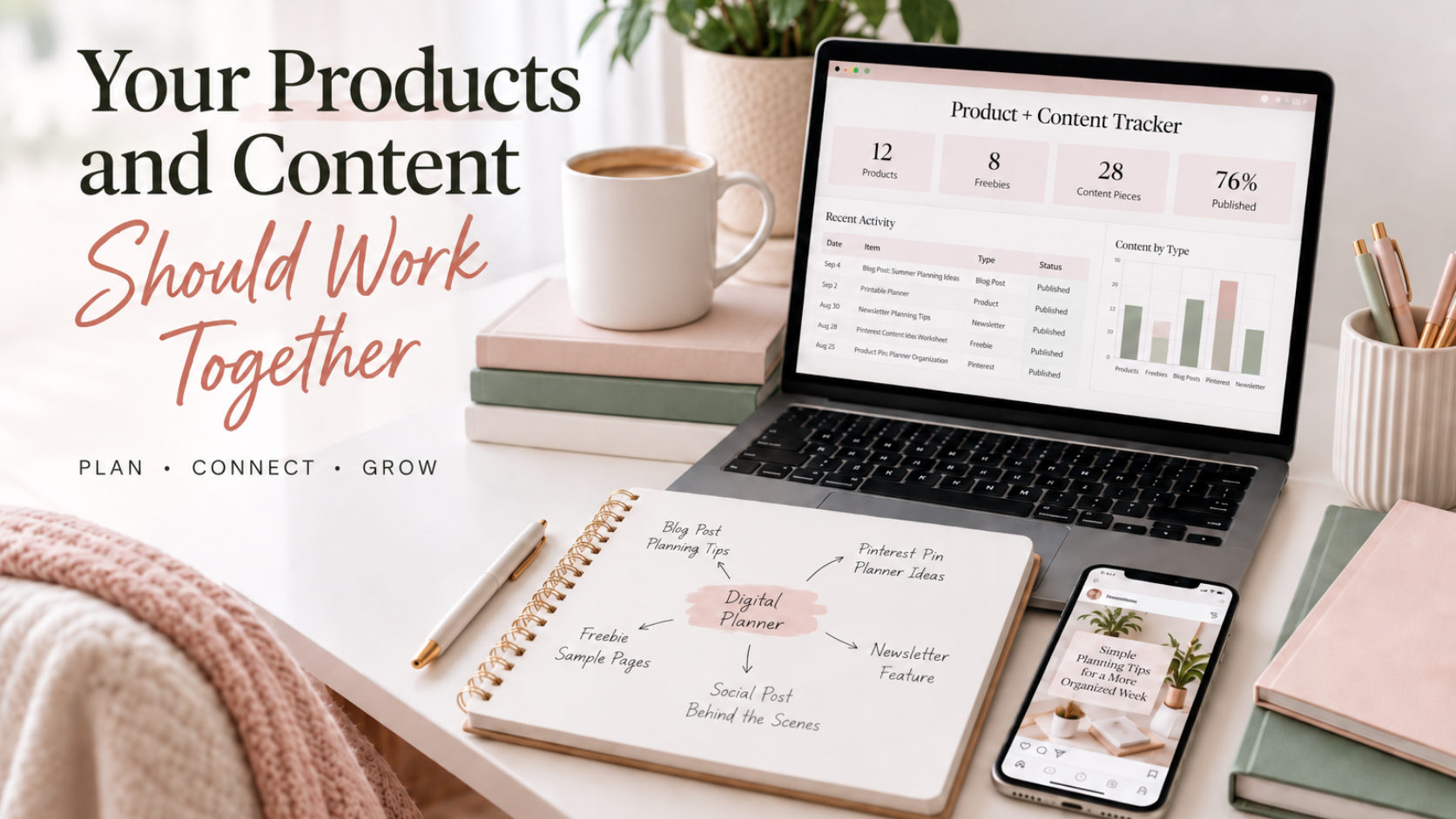
That’s really why I built the Product + Content Tracker. I wanted one place where the products, freebies, content, links, and results could actually connect instead of living in five different places. The Dashboard helps you see what is happening across the system, while the Search Bar lets you pull up the details for one item when you need them. It also includes a short Product-to-Content Planning Guide to help you map one product into a connected content path before adding those pieces to the tracker.
Instead of trying to remember where everything is and what still needs to be done, you can see the full path from product idea to published content in one organized place.
Explore the Product + Content Tracker